



Cébé
Outflow Lite Photochromic 1-3 ...


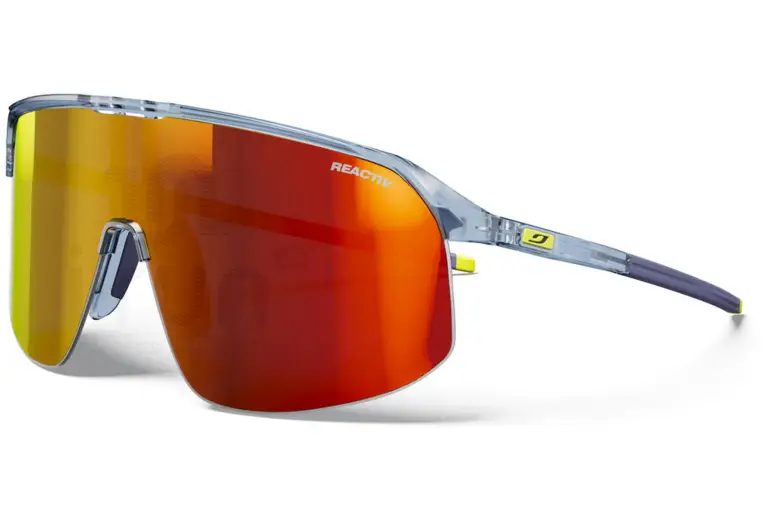


On the podium of lightness, the Julbo Density Reactiv Light Amplifier 1-3 glasses boast a minimalist design that accompanies you during your sporting performances, such as cycling.
The panoramic Reactiv Light Amplifier 1-3 lens features a visible transmission rate varying between 17% and 75%. Depending on the time of day and light intensity, the lens tint darkens or lightens.
Protective, the CustomFIT temples adjust with precision and provide reliable support. Made from Grip Tech, they stay in place while their Comfort Fit construction allows you to wear them under a helmet.
The aerated structure Front Venting ensures excellent air circulation between the lens and the frame to prevent the formation of fog.
The Grip Nose insert promises reliable adhesion over the miles.
Key features of the Julbo Density Reactiv Light Amplifier 1-3 glasses
Color: translucent blue and yellow
Characteristics of the Included Lens
Dimensions
Box Contents
No condensation, maximum longevity. Anti-fog treatment on the inner surface of the lens (creation of a water-saturated hydrophilic film) that prevents water vapor condensation and prevents fogging during intense effort.
Avoids dirt and promotes water runoff.
Natural airflow through the front by the cutout of the lenses.
Large surface of lenses for maximum field of vision.
Support and comfort thanks to the soft material that doesn't snag hair.
Soft, shock-absorbing, and non-slip nose insert.
Here is the translation of the provided French text:
Branches designed to ensure a good hold while maintaining comfort even with a helmet.
The branches are equipped for precise adjustment to ensure a perfect and lasting fit. The support is maintained and preserved throughout each outing.
Visible light transmission from 75% to 17%.
Favorite weather: from cloudy to sunny
Enhanced brightness
Favorite activities: Trail running and cycling
Anti-fog and oleophobic
Each frame is predominantly made from bio-based material. These plant-based elements are developed from castor seeds. Julbo has been using this advanced material for several years for its environmental qualities and technical benefits: lightness, flexibility, and durability. It is now applied to the majority of the products.


