


COROS
Pace 4


The Garmin Forerunner 255S sports watch accompanies you in both your regular running sessions and new athletic challenges. Its sophisticated design helps you achieve even the most demanding goals.
You have access to more than 30 sports profiles to help you get the most out of yourself, including running, cycling, triathlon, hiking, and swimming. For the latter, you can choose between pool swimming and open water swimming modes.
The Garmin Forerunner 255S is equipped with the Elevate Gen 4 heart rate sensor and the Pulse Ox 2.0 oximeter, capturing important fitness data. Based on this information, it shows you training recommendations and health data directly after waking up.
An analysis is performed to improve your performance, which can be used to optimize your recovery after exertion. The Garmin Connect app allows you to organize and create training sessions, taking into account your level and goals.
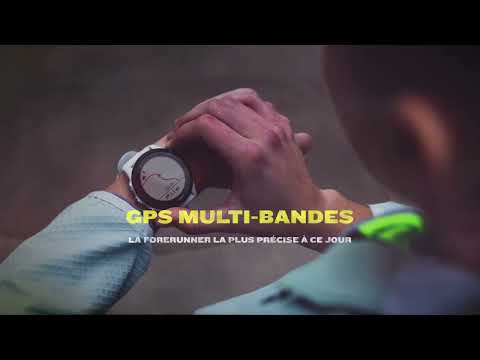
The multi-band GPS calculates your position with high precision, even in difficult environments. The barometric altimeter is also useful for your outdoor excursions.
The watch features the Fitness Age 2.0 algorithm and the HRV test, which allow you to monitor your health status. The HRV test evaluates the time interval between two heartbeats to measure your fitness and stress level.
The watch, revised for longer battery life, runs up to 26 hours in GPS mode and up to 12 days in smartwatch mode.
Model Type: Smaller version of the Forerunner 255, designed for narrower wrists.
Sports Profiles: Over 30 sports profiles for diverse athletic needs.
GPS Features: Multi-band GPS and Multi-GNSS (GPS, GLONASS, GALILEO) ensure precise positioning in challenging environments like canyons and urban areas.
Heart Rate Sensor: Elevate Gen 4 sensor for 24/7 heart rate monitoring, including underwater.
Oximeter: Pulse Ox 2.0 measures blood oxygen saturation
Altimeter: Barometric altimeter for analyzing altitude differences and assessing storm risks.
Additional Sensors: Includes a compass, accelerometer, and thermometer.
Activity Tracking: 24/7 tracking of steps, sleep, calories, floors climbed, distance, physical age, daily strain, and intensity minutes.
Training Recommendations: Automatic suggestions based on your fitness, stress level, and sleep patterns.
Permanently display your beats per minute to help you improve your physical condition.
Optimize your body's energy reserves by using heart rate variability, stress, sleep, and other data to assess your fitness level or when you should rest.
Pulse measurement, a pulse oximeter measures the amount of oxygen (relative to the maximum capacity) in the blood as it moves through your body.
Incident detection and assistance request functions.
Are you training for a 5K, 10K, or a half marathon? Download a custom-fit Garmin Coach training plan for free, tailored to your schedule and abilities.
Garmin Connect is an online community where athletes can connect and compete by participating in challenges, encouraging each other, and sharing their performances via social networks. Garmin Connect is free and available on your smartphone with the Garmin Connect Mobile app.
Train smarter with VO2 Max, an indicator of your performance.
Personalize your watch with watch faces, data fields, apps, and free widgets from the Connect IQ TM store.
Plan your race strategy with the PacePro TM 3 feature that offers GPS pace guidance based on elevation for a selected course or distance in the Garmin Connect TM app.
Proposal for a selection of HIIT training options, such as AMRAP, EMOM, Tabata, and much more. HIIT provides tips throughout your workouts, sets the number of rounds, and chooses the work/rest intervals.
The Race Predictor function displays, on a graph, the evolution of race time predictions over the long term, allowing you to better track the development of your capabilities and performance.
This unique new feature from Garmin is a technological achievement, delivering unparalleled GPS location accuracy. Thanks to the constant recalibration of position by the watch on both frequencies of each multi-band compatible GNSS network, this technology effectively identifies and eliminates erroneous positioning data, thereby offering much higher accuracy, especially in canyons, cities, and challenging alpine environments.
The wrist-based optical heart rate monitor of Garmin smartwatches is a useful tool that enables the user to obtain precise heart rate estimates at any time. The optical heart rate monitor is designed to monitor the user's heart rate 24 hours a day, 7 days a week.
Allows you to track menstrual cycles and display cycle details as well as other statistics on Garmin Connect.
New algorithm using the user's chronological age, VO2 Max, resting heart rate, and either BMI or body fat percentage (BMI will be used if body fat percentage is not available). Indicates to users whether their body is "older" or "younger" than they are.
Enables the consultation of respiration data throughout the day, during sleep, and during yoga and breathing activities.
Heart rate variability is the variation in the time interval between two heartbeats. The level of HRV varies greatly among individuals, but in general, a high HRV is considered a marker of good physical fitness and health, while a low HRV is associated with negative health effects and a high level of stress.
For greater accuracy on the track, the track activity profile increases the frequency of GPS position updates.
The "Running Power" feature utilizes metrics such as pace, vertical oscillation, slope, and even wind force to calculate the power in watts that you apply to the ground while running. By knowing the power you expend each minute and each kilometer, you can manage your pace more effectively and thus better manage your effort.
More than 1400 fully customizable exercises available. Displays the muscle groups worked during the activity directly on the watch.
Live Events Sharing (Android only) allows your entourage to interact via text messages and send encouragements.
The running power function developed by Garmin utilizes metrics such as pace, vertical oscillation, incline, and even wind resistance to calculate the power you transfer to the ground while running.
By obtaining the power you expend each minute and each kilometer, you can manage your pace more easily and thus avoid tiring yourself out too quickly.
Whether uphill or downhill, runners can now obtain their equivalent pace on flat terrain, making it easier to maintain a steady effort.