


COROS
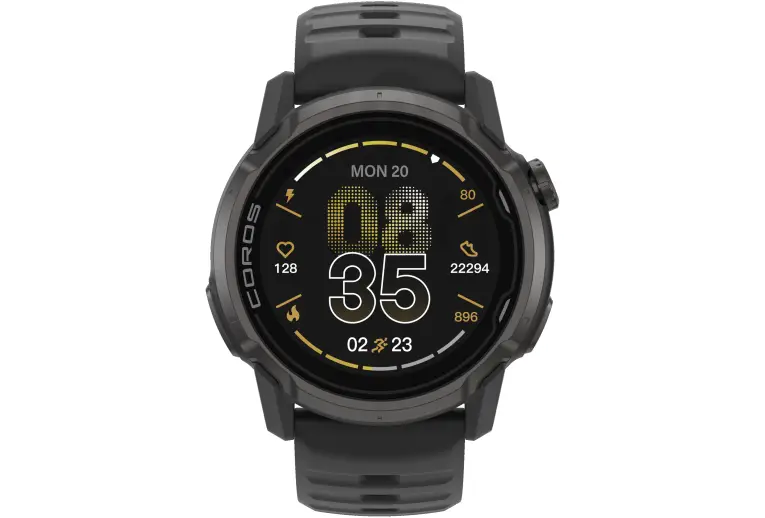
Apex 4 42 mm




The i-Run team says
Developed for high-altitude athletes, the Coros Apex 4 watch accompanies you on the most remote trails during your trail running or hiking sessions.
Thanks to its GNSS All-Satellite chip, the GPS provides highly reliable tracking, even in isolated areas. In endurance mode, the watch intelligently adjusts satellite signal capture to conserve battery life.
To support you on all your outings, the mapping system has been improved. You can generate routes, determine waypoints and points of interest, and access street and path names for easy navigation.
The built-in microphone and speakers allow you to make calls and receive voice notifications. You can track your progress throughout the effort, thanks to audio alerts that indicate your pace, speed, and distance traveled.
You can check the real-time weather to move safely in the mountains. For your safety, alerts are sent in case of a storm or significant altitude change.
The optical heart rate sensor helps you decipher your performance and sleep quality with precision. You analyze each stage of your outings with the adventure journal feature.
Designed for daring adventurers, it features sapphire glass and a titanium alloy bezel to offer maximum durability, regardless of the conditions.
You benefit from a battery life that can extend up to 65 hours in GPS endurance mode for the 46 mm model and up to 41 hours for the 42 mm watch.
Key features of the Coros Apex 4 watch
Size and weight:
Screen:
Watch strap:
Battery:
Technical description
Box Contents:
Material:
Connectivity:
Durability:
Internal Memory:
Location:
Navigation:
Sensors:
Training Functions:
Daily Functions:
Third-Party App Integration:
Available Languages:
Running Activity Modes:
Walking Activity Modes:
Cycling Activity Modes:
Swimming Activity Modes:
Climbing Activity Modes:
Water Activity Modes:
Aerobic Activity Modes:
Winter Activity Modes:
Other Activity Modes:
Technologies
Digital Knob
Digital dial ideal for single-finger use. It is easily manipulated even with thick gloves or underwater.
Altitude Mode
The COROS Altitude Acclimatization Evaluation System collects SpO2 data and assesses altitude acclimatization levels for climbers when the altitude is above 2500 meters. Climbers receive more quantified and precise information, along with real-time monitoring and notifications to effectively prevent altitude sickness.
When the altitude acclimatization index is between 0 and 60, climbers have low acclimatization to the current altitude. If you stay too long in this zone and experience symptoms such as headaches, rapid heart rate, shortness of breath, chest tightness, or purple discoloration of the lips, it is recommended to descend. If there is no obvious discomfort, please focus on resting.
When the altitude acclimatization index is between 61 and 80, climbers have moderate acclimatization to the current altitude. If there is no obvious discomfort, climbers can perform certain activities to better adapt. Please focus on resting if discomfort occurs.
When the altitude acclimatization index is between 81 and 100, climbers have strong acclimatization to the current altitude. If you remain in this zone without obvious discomfort, the expedition can resume.
COROS Training Hub
Building on the COROS EvoLab framework, the COROS Training Hub now provides you or your coach with the necessary tools to train at the highest level – for free. Instant access to your data via the COROS Training Hub web portal allows you to analyze past and present metrics, communicate and interact with your coach, develop a training plan, and join or manage a team.
Suggestions