



adidas
Adizero Adios Pro Evo 2

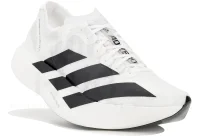




Shoes play an essential role in running. Even with good physical fitness, unsuitable equipment can quickly impact the body. Choosing a comfortable and suitable sports shoe is therefore essential for running in good conditions. A good model allows you to enjoy your runs while limiting the risk of injury. Conversely, a poor choice can lead to pain and, over time, real health problems, which is why it is important to choose your men's running shoes carefully.
Among men's running shoe brands, some stand out for both their innovation and the design of their shoes. Find on our i-Run website:
Whether you are a passionate amateur, an experienced marathon runner or a professional athlete. ASICS men's running shoes are popular worldwide for their exceptional comfort, remarkable durability and distinctive aesthetic that ensures you stand out in style.
With their innovative design focused on comfort and performance, Hoka men's running shoes offer superior cushioning and a smooth stride, ideal for long distances and varied terrain.
Nike men's running shoes are synonymous with cutting-edge technology and iconic style. With a diverse range of models, from competition shoes to more simple running trainers, Nike offers options for all types of runners, combining performance and aesthetics.
Also explore the adidas men's running shoe range, renowned for its perfect blend of comfort, durability and contemporary design. If you are looking for a lightweight shoe for your fast runs, adidas offers a variety of choices to meet your needs.
Mizuno men's running shoes are appreciated by runners around the world for their combination of advanced technology and unmatched comfort. With a focus on innovation and performance, Mizuno shoes offer optimal support and a dynamic stride.
Thanks to its outdoor expertise, the French brand Salomon has been able to extend its know-how to the world of running. Salomon men's running shoes are responsive, flexible and lightweight, just like their outdoor pairs.
Combining comfort and support, Brooks men's running shoes are ideal for all distances and all types of runners. They also offer versatility and stability, as seen with the latest Brooks Ghost model.
Different factors come into play when choosing the right pair. We help you discover them so you can find the men's running shoe best suited to your profile.
The choice of your sports shoes must take each runner's build into account.
The heavier the build, the more necessary it is to pay particular attention to the cushioning of the soles, in order to avoid injuries and joint pain. We recommend keeping in mind that a shoe with a high price does not necessarily mean high-performance cushioning.
We recommend that a heavier runner look for stable shoes with enhanced support to compensate for the additional impact. We also recommend choosing models with durable materials that better resist wear. Do not forget to check reviews from other runners with a similar body type to find recommendations suited to your profile.
Identifying your stride is crucial when choosing the ideal men's running shoe. It is therefore important to know that a runner can have three types of stride: overpronating stride, neutral stride and supinating stride.
To determine your stride type, we recommend visiting an i-Run store for a diagnosis. Note that this can also be done at home by observing the wear on your old running shoes. If your foot moves inward, then you have an overpronating stride. If your foot moves outward, then you have a supinating stride.
Once your stride has been identified, choose a men's running shoe to improve your comfort, help prevent injuries and optimize your performance during training and competitions.
To identify the shape of your arch, simply wet your feet and place them on a colored sheet of paper. Depending on the footprint left behind, you will be able to determine whether you have a medium or low arch.
The shape of the shoe fit also comes into play when choosing the right men's running shoe. Depending on your needs and preferences, choose a narrow, wide or more generous fit to ensure maximum comfort. A well-adapted fit can prevent rubbing, blisters and discomfort, allowing you to run longer and more efficiently.
The choice of your running shoes must also take into account the type of terrain on which you run regularly.
For road running, choose men's shoes with good cushioning. This will help reduce impact on hard surfaces and also provide a smooth stride. These shoes are often lightweight, very comfortable and designed for speed on asphalt and concrete.
If you run on dirt paths, trails or in the forest, choose men's trail running shoes. They offer better grip, increased stability and extra protection against obstacles such as stones and roots. The soles are more robust and the materials more resistant to wear.
For track training, we recommend lightweight running shoes with excellent responsiveness. They allow fast accelerations and good support, while offering a good feeling of contact with the surface.
By taking the type of terrain into account, you will be able to choose suitable men's running shoes that maximize your comfort and performance while minimizing the risk of injury.
To choose the right size of men's running shoes, measure your foot at the end of the day, when it is slightly swollen. We recommend leaving about a thumb's width (2.54 cm) between the end of your longest toe and the end of the shoe, to allow your feet to swell and your toes to move freely while running. Trying several sizes and models can also help you find the ideal men's running shoe, as sizing can vary depending on the brands and models.
If you are just starting out or run occasionally, choose shoes that offer a good balance between cushioning, comfort and durability. These shoes should be versatile, capable of supporting you on various terrains and at different intensities, while helping to prevent injuries.
If you follow an intensive training program, choose men's running shoes with excellent cushioning and good stability. These shoes should be able to withstand high running volumes and offer optimal comfort, in order to reduce muscle fatigue and the risk of injury.
If your goal is to take part in competitions, such as marathons or half-marathons, we recommend lightweight and dynamic shoes. These models are designed for performance, offering increased responsiveness and efficient propulsion to help you achieve your best times.
If you are used to training over short and long distances, on roads or groomed paths, we recommend choosing versatile models such as the Brooks Ghost, the Hoka Clifton or the ASICS Novablast.
However, if your goal is pure performance in competition, opt instead for carbon-plated models such as the Nike Vaporfly or the ASICS Metaspeed, demanding shoes designed more for race day than for daily training.
Whatever model you choose, take advantage of special offers on i-Run to run with quality shoes at low prices.
Choosing running shoes specifically designed for men is important because they take into account the anatomical and biomechanical differences between men and women.
Men generally have wider feet, higher body mass and stride characteristics that differ from women, which influences shoe design, particularly in terms of cushioning and support. Shoes adapted to these specific features offer better protection against injuries, optimal comfort and enhanced performance.
Similarly, women's running shoes are specially designed to adapt to narrower feet, ensuring optimal support and comfort. Shoes adapted to these specific features offer better protection against injuries, comfort and enhanced performance.